
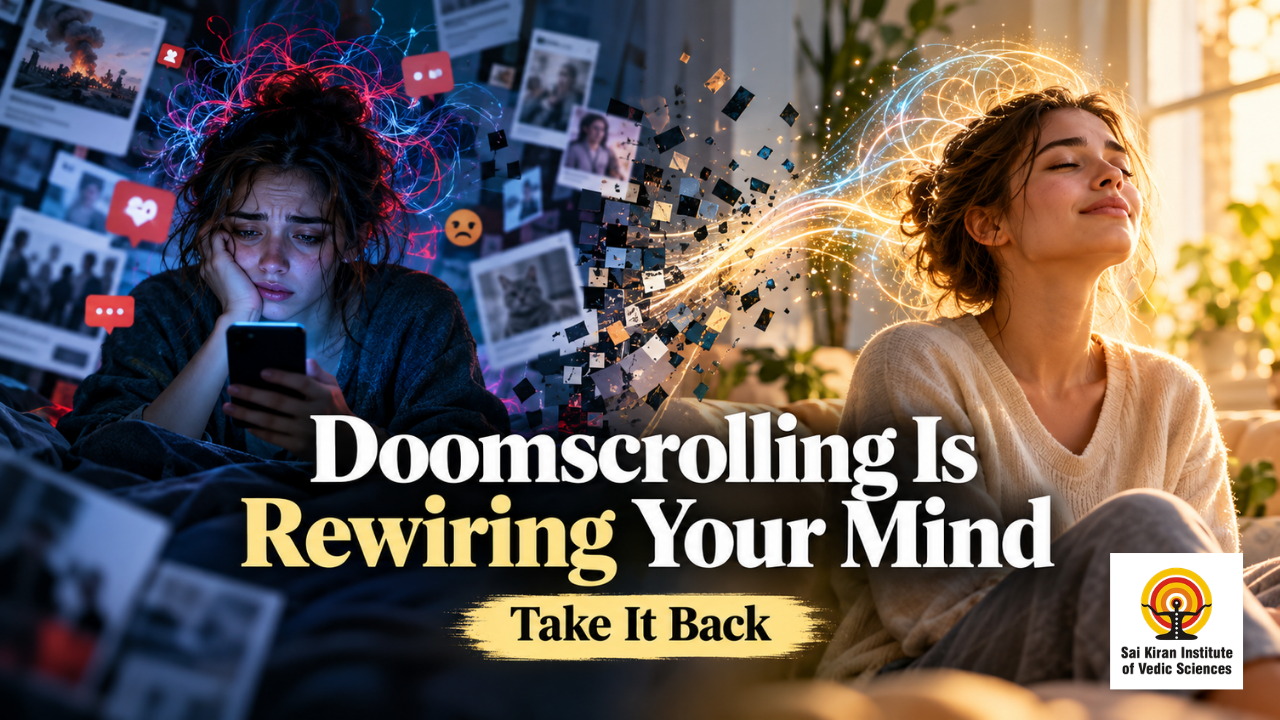
It's 11:40 pm. You only meant to check one message, but forty minutes later you're deep in bad news, comparison posts and opinions you never asked for. Your body is tired, yet your mind is racing. If this sounds familiar, you're not weak or undisciplined. You're caught in doomscrolling, one of the most talked-about mental health habits of our time.
Why doomscrolling hooks us
The human brain is wired to scan for threat. In ancient times, that kept us safe. Today, the same instinct treats every alarming headline as a personal emergency. Each scroll carries a tiny promise: "Maybe the next post will make me feel safe." It rarely does, so we keep going. Meanwhile, the body stays in a low-grade stress response: shallow breathing, tight shoulders, a restless mind.
Over time, this can show up as anxiety, poor sleep, irritability, difficulty concentrating and a constant feeling of not being enough. Many people describe it as "my mind never switches off."
Willpower alone rarely works
Telling yourself to "just stop" is like telling a wave to stop moving. The habit lives in the subconscious mind, where automatic patterns run. That's why approaches that work at this deeper level, such as hypnotherapy and NLP, can be so helpful. They help you notice the trigger (boredom, loneliness, stress), interrupt the pattern and build a calmer response in its place.
Five practices to begin today
1. Name the trigger. Before opening the app, ask: "What am I feeling right now?" Awareness alone breaks the autopilot.
2. Try the 4-6 breath. Inhale for 4 counts, exhale for 6. A longer exhale helps signal the nervous system to settle. Do six rounds before unlocking your phone.
3. Create a sunset rule. Keep the last 45 minutes before bed screen-free. Swap in gentle stretching, journaling or a guided relaxation.
4. Reframe your language. Instead of "I have no control," say "I choose what I let into my mind." Language shapes feeling, a core NLP principle.
5. Replace, don't just remove. Keep a book, a gratitude list or a short meditation within reach so your hands and mind have somewhere better to go.
Healing the need beneath the habit
Often, doomscrolling isn't about the news at all. It's about wanting certainty, connection or a distraction from something we don't want to feel. When you gently address that need, the urge loses its grip.
You deserve a mind that feels like home, not a battlefield. If your thoughts feel too loud to quiet alone, a guided session can help you reset the pattern at its root.
Tonight, put the phone down, breathe out slowly and notice how your body feels. That's where healing begins.
Ready to calm your mind? Book a consultation with Dr. Shalini Mehta today.